Bulk tempered glass screen protectors should be approved by model fit, edge finish, adhesive behavior, surface coating, optical quality and packaging—not by a “9H” label alone. For importers and private-label brands, the safest method is to freeze an approved sample, define model-specific inspection points, and compare the pre-shipment batch with the same written specification.
This wholesale QC checklist is designed for buyers sourcing phone and tablet protectors from China. It covers full-glue tempered glass, black-border glass, case-friendly designs and standard retail kits. Exact tolerances and test thresholds must be agreed for the target device, glass construction, packaging and destination market.
Quick answer: what should importers test before buying bulk screen protectors?
- Model identity, display coverage, cutouts, corner radius and case compatibility.
- Glass surface condition, polished edges, chips, scratches, cracks, stains and printing alignment.
- AB glue lamination, bubble release, white-edge or halo behavior, dust and adhesive uniformity.
- Oleophobic coating consistency, touch feel and wipe-clean performance using an agreed method.
- Optical clarity, color shift, black-border screen obstruction and touch response.
- Film tabs, cleaning kit, tray, retail packaging, barcode, model label and master-carton protection.
- Batch sampling records, retained samples and a clear replacement process for verified defects.
Buyers can review current models in our wholesale screen protector category and use this checklist together with the general mobile accessories buyer QC checklist.
Why the manufacturing process matters to wholesale QC
A tempered glass protector is a layered product, not just a cut sheet of glass. The manufacturing flow can include cutting and CNC shaping, edge polishing, cleaning, chemical tempering, additional cleaning, surface treatment, printing, AB-glue lamination, inspection and packaging.
The India Cellular & Electronics Association industry report on tempered glass screen protectors describes chemical tempering, ultrasonic cleaning, AF/oleophobic/hydrophobic coating, AB-glue lamination and final inspection for dust, bubbles and edge damage. That process map is useful for buyers because every stage creates a different possible defect. It does not create one universal pass/fail standard; the PO still needs buyer-approved methods and limits.
1. Freeze the exact device and protector construction
Use a complete model name and internal SKU. “For iPhone” or “for Samsung” is not enough because generations, display sizes, camera positions, speaker openings and corner radii differ. Confirm whether the protector is:
- Clear, privacy, matte or anti-glare.
- Full clear glass or black-border printed glass.
- 2.5D, 3D or another edge/profile description defined by a drawing or sample.
- Flat-screen or curved-edge application.
- Full glue, edge glue or UV-liquid adhesive system.
- Case-friendly, full coverage or supplied with an alignment tray.
- Phone display glass, tablet glass or camera-lens protector.
Marketing terms are used inconsistently across suppliers. Attach a dimensioned drawing or signed sample whenever a profile name affects fit. For edge terminology, see our 9D vs 2.5D tempered glass wholesale comparison.
2. Check model fit before testing surface claims
Fit defects create immediate returns even when the glass itself looks premium. Test the sample on the intended device or a verified fixture. Inspect the outer outline, active display coverage, speaker and camera cutouts, sensor area, black-border position and corner radius.
Case compatibility
Install at least one representative case type from the buyer’s market. A full-coverage protector can lift when the case lip pushes its edge. A case-friendly protector can avoid lifting but may leave a larger visible gap. Neither choice is automatically superior; the buyer should approve the intended combination.
Black-border obstruction
Place the phone on a bright screen and inspect all four edges. Printed borders must not hide usable pixels or create an uneven frame. Compare the left/right and top/bottom alignment with the golden sample.
Cutout and sensor alignment
Verify that the earpiece, front camera, proximity or fingerprint-related area works as intended for the model. Do not assume one cutout pattern fits every regional device version.
3. Inspect glass and edge quality
| Inspection area | Common bulk defect | Buyer check |
|---|---|---|
| Visible surface | Scratches, stains, pits, bubbles in glass or printing contamination | Inspect under agreed lighting against a clean background |
| Edge | Chips, cracks, rough polish, sharp points or inconsistent radius | Visual and tactile check with safe handling; reject unsafe edges |
| Flatness | Warping that causes lift or uneven adhesion | Compare on a verified flat fixture and during installation |
| Printing | Shift, pinholes, uneven opacity or ink on the active area | Overlay on the target device or approved drawing |
| Protective films | Wrong tab, weak tab, residue or reversed layer | Run the complete installation sequence |
If “9H” is stated, ask which test method, pencil set, load, preparation and acceptance rule support the claim. Pencil-hardness language should not be treated as proof of impact resistance, edge quality or correct tempering. Impact and breakage testing also need an agreed fixture, impactor, height or energy, support condition and sample quantity; otherwise two suppliers’ results are not comparable.
4. Evaluate AB glue and installation behavior
AB glue is a critical lamination layer. The ICEA report notes that glue performance can be judged through flow, bubbles and halo or white-edge behavior, and that appropriate glue thickness is needed. For a buyer, the practical approval test is a controlled installation on the target device or verified fixture.
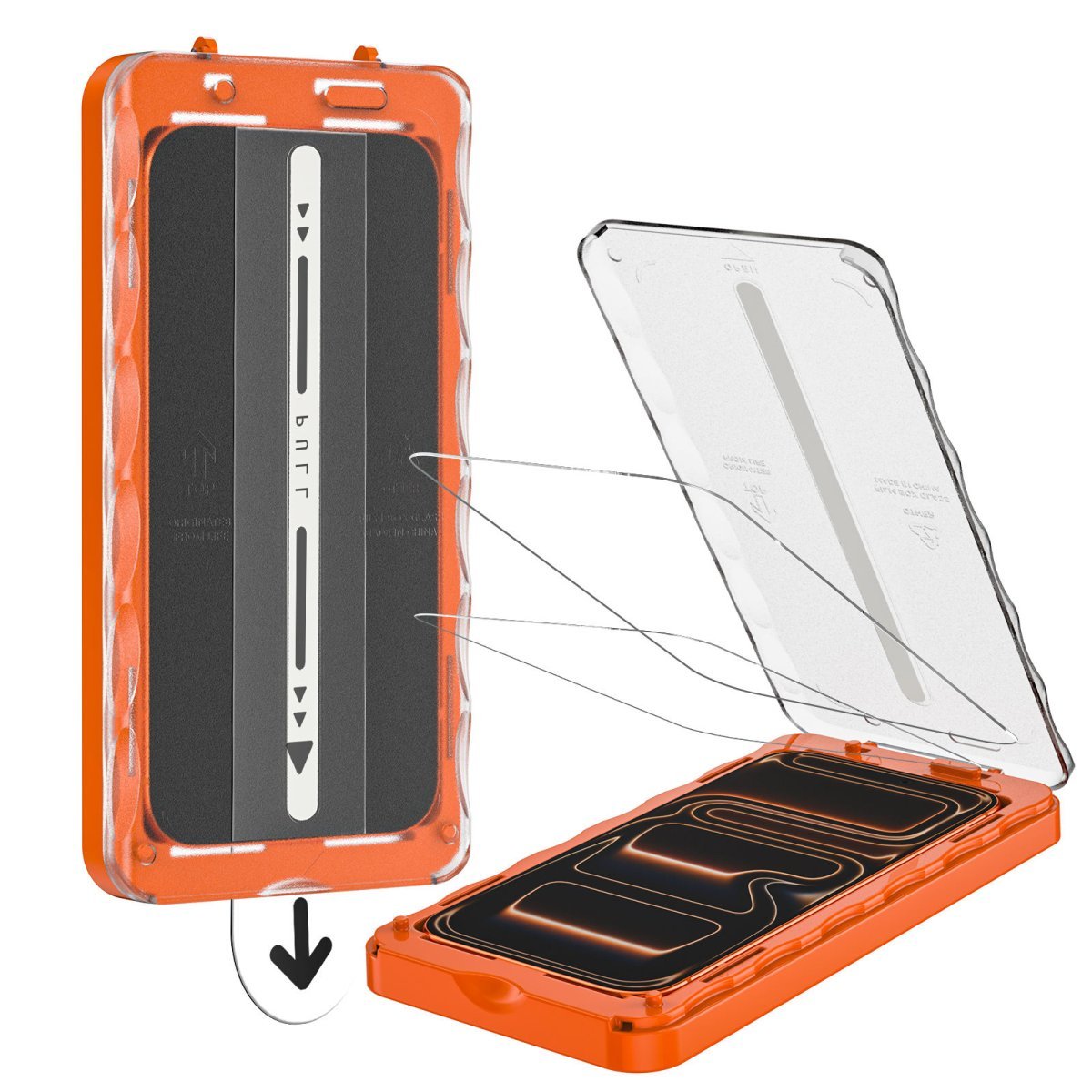
- Clean the device using the exact kit supplied with the product.
- Remove the release film using the tab without touching the adhesive.
- Align and place the protector using the intended method or tray.
- Observe how the adhesive spreads and whether air exits without excessive force.
- Inspect for bubbles, Newton-ring-like visual effects, white edges, dust points and incomplete adhesion.
- Leave the assembly for the buyer-agreed conditioning time, then recheck edge lift and bubbles.
- Remove a sample and inspect for unusual residue or adhesive transfer when this is part of the agreed test.
Record the device, room condition, operator, photos and result. A fast demonstration video from one hand-picked sample is not a substitute for batch sampling.
5. Verify oleophobic coating without vague claims
Oleophobic coating is intended to reduce visible oil contamination and make the surface easier to wipe. It is not permanently fingerprint-proof. The ICEA process description identifies manual, plasma-spray and electroplating approaches and explains that the surface should resist smudging and clean more easily.
For purchasing, agree a repeatable screening method. Options may include a controlled droplet observation, a defined marker/wipe test, touch-feel comparison with the signed sample, or an instrumented contact-angle method when the project requires it. The RFQ should name the method and threshold rather than only saying “premium coating.” If no instrumented requirement is agreed, describe the check honestly as a comparative screening test.
6. Check optical clarity and touch response
- Use white, black, red, green and blue test screens to check haze, tint, rainbow patterns and local distortion.
- Compare brightness and viewing angle with the approved sample.
- Swipe and type across the center, edges and corners.
- Check the fingerprint-recognition area when relevant to the device and protector type.
- Verify that privacy or matte products meet their specific viewing and texture requirement; do not compare them with clear-glass expectations.
For tablet programs, larger glass creates additional flatness, transport and packaging risks. Our iPad tempered glass wholesale guide covers the sourcing context for those models.
7. Audit the installation kit and retail packaging
A good protector can still produce returns when the kit is incomplete or mislabeled. Confirm the agreed contents: wet wipe, dry wipe, dust-removal sticker, guide stickers, microfiber cloth, alignment tray, instructions and any camera protector. Check language, barcode, model code, quantity, artwork revision and trademark authorization.
Package tests should reflect the sales channel and shipping route. Inspect whether the inner tray prevents movement, whether the glass contacts hard accessories, whether cartons resist compression, and whether moisture or abrasion can damage the kit. Conduct the buyer-approved carton or transit test using final retail packaging—not a protective sample box that will not be used in production.
8. Create a sample-to-bulk control plan
Golden sample
The buyer and supplier should keep matching signed samples for every construction or model family. A color, border, cutout, glue or packaging revision needs a new revision code.
Pre-production sample
Review the final artwork, device fit, installation sequence, kit and retail packaging before mass production. Confirm which components are shared across models and which are model-specific.
Pre-shipment inspection
Use a written sampling plan and classify defects as critical, major or minor for the project. Record actual counts for fit, surface, edge, glue, coating, optical, kit, label and packaging checks. Retain samples by batch so future claims can be compared with unused stock.
Claim feedback
Track returns by model, batch and defect—not only by total refund value. Separate installation error, case interference, transport damage, normal wear and probable manufacturing defects. Repeated edge lift from one model should trigger a fit or glue review; repeated chips should trigger edge and packaging investigation.
RFQ checklist for a comparable wholesale quotation
- Target device models and destination market.
- Clear, privacy, matte or other construction.
- Coverage style, edge profile, cutouts, black border and case requirement.
- Glass, tempering and thickness requirements with named test methods where applicable.
- Adhesive system and installation-performance acceptance.
- Oleophobic-coating test method or approved-sample comparison.
- Retail kit, alignment tray, packaging, barcode and language.
- Quantity per model, sample request and expected repeat-order plan.
- Inspection plan, retained sample, defect handling and required documents.
Doolike supplies model-specific screen protector and mobile accessory programs from Guangzhou, China. Review a current 9H tempered glass screen protector configuration, see our factory and QC workflow, or request a model-specific wholesale quote.
Key takeaway
The best wholesale screen protector is not the one with the longest list of marketing labels. It is the one whose model fit, glass and edge condition, adhesive behavior, coating, optical performance and packaging remain consistent from approved sample to bulk shipment. Put those checks into the RFQ before comparing prices.