Introduction: Why 9D vs 2.5D Tempered Glass Matters for Wholesalers
The global mobile phone screen protector market reached $42.5 billion in 2025, with tempered glass accounting for over 75% of total sales (Grand View Research). As a B2B wholesaler, understanding the difference between 9D and 2.5D tempered glass is crucial for meeting diverse customer demands across different market segments.
In this comprehensive guide, we'll break down the technical specifications, pricing structures, MOQ requirements, and wholesale strategies for both types—helping you make informed purchasing decisions and better serve your B2B customers.
What Is 2.5D Tempered Glass? Technical Specifications
2.5D tempered glass features a slightly curved edge that transitions smoothly from the flat surface to the rounded border. This design has been the industry standard since 2015 and remains the most popular choice for budget-conscious markets.
Key Technical Features
- Edge curvature: 0.3-0.5mm rounded edge transition
- Thickness range: 0.15mm to 0.33mm (industry standard: 0.26mm)
- Surface hardness: 9H (withstands scratches from most everyday objects)
- Light transmittance: 92-95%
- Oleophobic coating: Standard anti-fingerprint layer (2000+ rub cycles)
Manufacturing Process
The 2.5D edge is achieved through CNC precision grinding after the tempering process. This adds approximately $0.01-0.02 per piece to manufacturing costs compared to flat glass, but significantly improves user experience by eliminating sharp edges.
What Is 9D Tempered Glass? Advanced Curved Technology
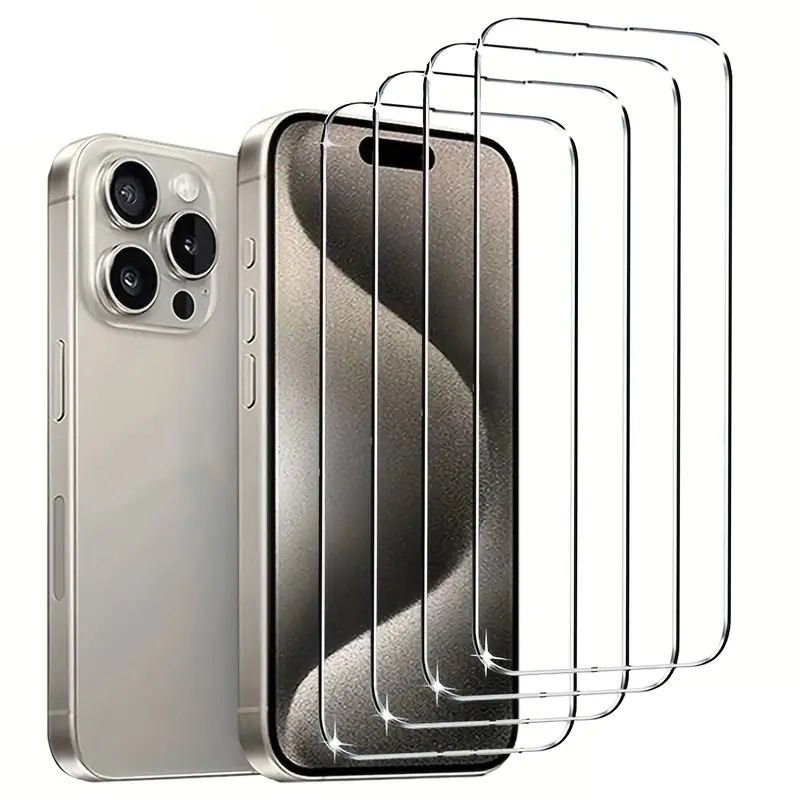
9D tempered glass represents the latest evolution in curved screen protector technology. The "9D" designation refers to the multi-axis curvature that covers not just the front surface but extends to the curved edges of modern smartphones—providing full coverage similar to factory-installed glass.
Key Technical Features
- Edge coverage: Full edge-to-edge curved coverage (2.5-3.5mm curved portion)
- Thickness: 0.26-0.33mm at center, thinner at edges
- Surface hardness: 9H with enhanced impact resistance
- Touch sensitivity: 99.5% touch response rate
- Installation: Typically includes application frame for precise alignment
Why It's Called "9D"
The term "9D" is a marketing designation rather than a technical standard. It indicates that the glass curves along multiple dimensions to match the smartphone's curved display. Major brands like Samsung, OnePlus, and Xiaomi's flagship devices require 9D protectors for full coverage.
9D vs 2.5D Tempered Glass: Wholesale Comparison Table
| Specification | 2.5D Tempered Glass | 9D Tempered Glass |
|---|---|---|
| Edge Design | Slightly curved edges (0.3-0.5mm) | Full curved coverage (2.5-3.5mm) |
| Compatible Devices | All smartphones with flat or slightly curved screens | Phones with curved displays (Samsung S series, OnePlus Pro, Xiaomi Ultra) |
| Wholesale Price Range | $0.08 - $0.25/piece | $0.25 - $0.50/piece |
| MOQ (Standard) | 500-1000 pieces/model | 1000-3000 pieces/model |
| MOQ (Custom Packaging) | 2000-3000 pieces/model | 3000-5000 pieces/model |
| Defect Rate | 2-3% | 4-6% (higher due to complex curve) |
| Installation Difficulty | Easy (bubble-free adhesive) | Moderate (requires alignment frame) |
| Market Segment | Budget to mid-range | Premium, flagship devices |
Wholesale Pricing Analysis: 9D vs 2.5D
2.5D Tempered Glass Pricing Tiers
- Budget grade (0.15mm): $0.08-0.12/piece (MOQ: 1000+)
- Standard grade (0.26mm): $0.12-0.18/piece (MOQ: 500+)
- Premium grade (0.33mm + oleophobic): $0.18-0.25/piece (MOQ: 500+)
9D Tempered Glass Pricing Tiers
- Standard 9D (universal): $0.25-0.35/piece (MOQ: 1000+)
- Premium 9D (with installation frame): $0.35-0.45/piece (MOQ: 1000+)
- Ultra-thin 9D (0.15mm curved): $0.40-0.50/piece (MOQ: 3000+)
Note: Prices above are FOB China for orders above 5000 pieces. Smaller orders may incur 10-20% premium. For current pricing on specific models, contact Doolike wholesale team.
MOQ and Customization Options
Standard MOQ Requirements
Most factories have tiered MOQ structures based on customization level:
2.5D Tempered Glass
- Stock models (no customization): 100-500 pieces/model
- Private label packaging: 2000-3000 pieces/model
- Custom retail box design: 5000+ pieces/model
9D Tempered Glass
- Stock models: 500-1000 pieces/model (limited availability)
- Private label packaging: 3000-5000 pieces/model
- Custom branding on glass: 10,000+ pieces/model
OEM Customization Options
Both types support customization, but 9D glass requires higher MOQs due to mold costs:
- Logo printing: Laser etching or screen printing (MOQ: 2000+ for 2.5D, 5000+ for 9D)
- Custom packaging: Blister pack, paper box, or eco-friendly materials
- Bulk packaging: 50/100-piece rolls for installer businesses
Which Markets Prefer 9D vs 2.5D?
2.5D Tempered Glass Markets
- Southeast Asia: Budget-conscious consumers dominate (Indonesia, Philippines, Vietnam)
- Latin America: Price-sensitive markets prefer 2.5D's lower cost
- Africa: Rapidly growing demand for affordable protection
- Retailer segments: Phone repair shops, street vendors, budget accessory retailers
9D Tempered Glass Markets
- Europe: Premium smartphone users demand full coverage (Germany, UK, France)
- Middle East: Luxury device owners prefer 9D's seamless look
- North America: Flagship phone users willing to pay premium
- Retailer segments: Online stores, premium accessory boutiques, carrier stores
According to IDC's 2025 mobile accessories report, 9D tempered glass sales grew by 35% year-over-year in premium markets, while 2.5D maintains 65% volume share in developing regions.
Quality Control and Certification Standards
Essential Certifications for Both Types
- CE (Europe): Required for EU market entry
- FCC (USA): Mandatory for US sales
- RoHS: Restricts hazardous substances in manufacturing
- REACH: European chemical safety regulation
Quality Testing Checklist
\nFor a batch-level inspection sequence covering dimensions, AB glue, oleophobic coating, fit and packaging, use our tempered glass wholesale QC checklist.
Before placing wholesale orders, request these test results:
- Drop test: 1-meter height onto concrete (should survive 5+ drops)
- Scratch resistance: Mohs hardness test (must resist up to 6H pencil)
- Adhesion test: 500+ peel cycles without degradation
- Edge inspection: No chips, cracks, or bubbles at curved portions (especially for 9D)
FAQ: 9D vs 2.5D Tempered Glass Wholesale
What is the minimum order quantity for 9D tempered glass?
Standard MOQ for 9D tempered glass is 1000-3000 pieces per model for stock items with basic packaging. Custom branding or packaging typically requires 3000-5000 pieces per model. Some suppliers offer trial orders of 500 pieces at 20-30% premium pricing.
Why does 9D tempered glass cost more than 2.5D?
9D tempered glass costs 2-3x more than 2.5D due to complex manufacturing processes: (1) precision CNC curved molding, (2) multiple quality control checkpoints for edge consistency, (3) higher defect rates during production (4-6% vs 2-3%), and (4) specialized adhesive application for curved edges.
Can I mix 9D and 2.5D orders to meet MOQ?
Generally, no. Factories calculate MOQ per model and type because 9D and 2.5D require different production lines and molds. However, you can often combine multiple phone models of the same glass type to reach MOQ thresholds.
Which tempered glass type has better profit margins for wholesalers?
2.5D tempered glass offers higher volume margins (15-25% markup typical) due to lower costs and wider market. 9D glass offers higher per-unit margins (20-35% markup) but requires larger upfront investment and targets smaller premium customer segments.
How do I know if a phone model requires 9D vs 2.5D tempered glass?
Check the phone's screen specifications: devices with "curved display" or "waterfall display" in specs require 9D glass. Samsung Galaxy S/Ultra series, OnePlus Pro models, Xiaomi Ultra series, and Huawei Mate Pro series typically need 9D protectors. Most other smartphones use 2.5D.
What is the defect rate I should expect and how are replacements handled?
Acceptable defect rates are 2-3% for 2.5D and 4-6% for 9D tempered glass. Reputable suppliers offer credit notes or replacements for defects exceeding these thresholds. Always clarify defect policies in purchase contracts and inspect shipments upon arrival.
Conclusion: Choosing the Right Tempered Glass for Your B2B Business
For B2B wholesalers, the choice between 9D and 2.5D tempered glass isn't about which is "better"—it's about matching products to your customer segments. Stock both types to serve different markets:
- 2.5D for high-volume, budget-conscious markets (Southeast Asia, Africa, Latin America)
- 9D for premium device users and developed markets (Europe, Middle East, North America)
Start with 2.5D to build volume, then add 9D offerings as you expand into premium market segments. Partner with established manufacturers like Doolike to ensure consistent quality, competitive pricing, and reliable supply chains.
Related Articles
- GaN Charger Wholesale Guide 2026: Sourcing from China
- USB-C Cable Wholesale Buying Guide 2026: Specs and MOQ
- TWS Bluetooth Earbuds Wholesale Guide 2026
Ready to source tempered glass at wholesale prices?Contact Doolike's B2B team for factory-direct pricing on 9D and 2.5D tempered glass for iPhone, Samsung, Xiaomi, and all major smartphone brands.
Screen Protector Wholesale Next Step
After comparing 9D and 2.5D designs, review the screen protector wholesale category and send a model-specific RFQ.
RFQ checklist: include device models, quantity by model, protector type, edge preference, cleaning kit, logo, barcode, retail box and destination market. Request sample checks for dimensions, adhesive coverage, edge finish, clarity, touch response and transport protection.
For larger tablet models, continue with the iPad tempered glass wholesale guide.