Short answer: USB-C cable buyers should not approve bulk orders by appearance alone. For fewer slow-charging complaints, verify current rating, E-marker chip, PD protocol behavior, connector fit, bend life and packaging claims before shipment.
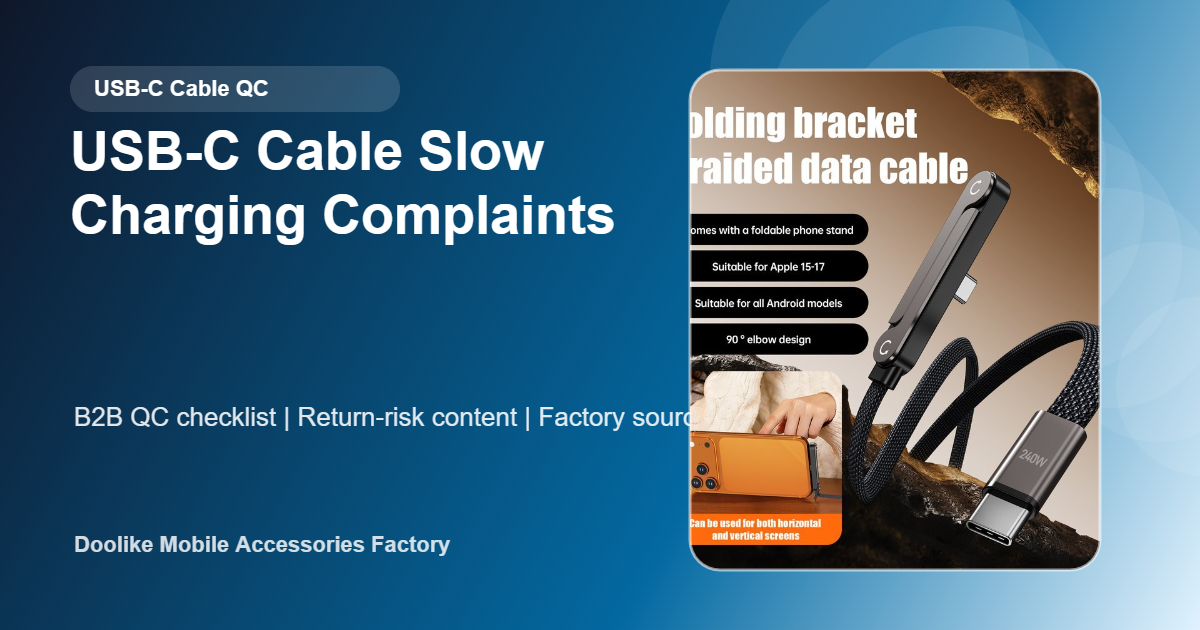
The buyer fear moment: "Customers say the cable looks premium but charges slowly"
This is one of the most painful cable complaints because the product is not completely dead. It works, but not at the speed printed on the package. That creates refunds, bad marketplace reviews and arguments with retailers.
Wholesale QC checklist
| Complaint | Factory test | Buyer requirement |
|---|---|---|
| Slow charging | 3A/5A current and PD output test | Test with real phones, tablets and laptops |
| 240W claim not trusted | E-marker verification | Ask for chip and protocol report |
| Loose connector | Insertion/extraction force test | Define acceptable connector feel |
| Cable breaks near plug | Bend test at connector neck | Request bend-cycle sample video |
| Retail returns | Packaging claim review | Print wattage and compatibility clearly |
What importers should ask before deposit
- Is this cable 60W, 100W or 240W in real PD testing?
- Does it include an E-marker chip for high-power USB-C charging?
- Can the same batch pass bend testing after packaging is finalized?
- Can you provide OEM packaging with clear wattage and device compatibility?
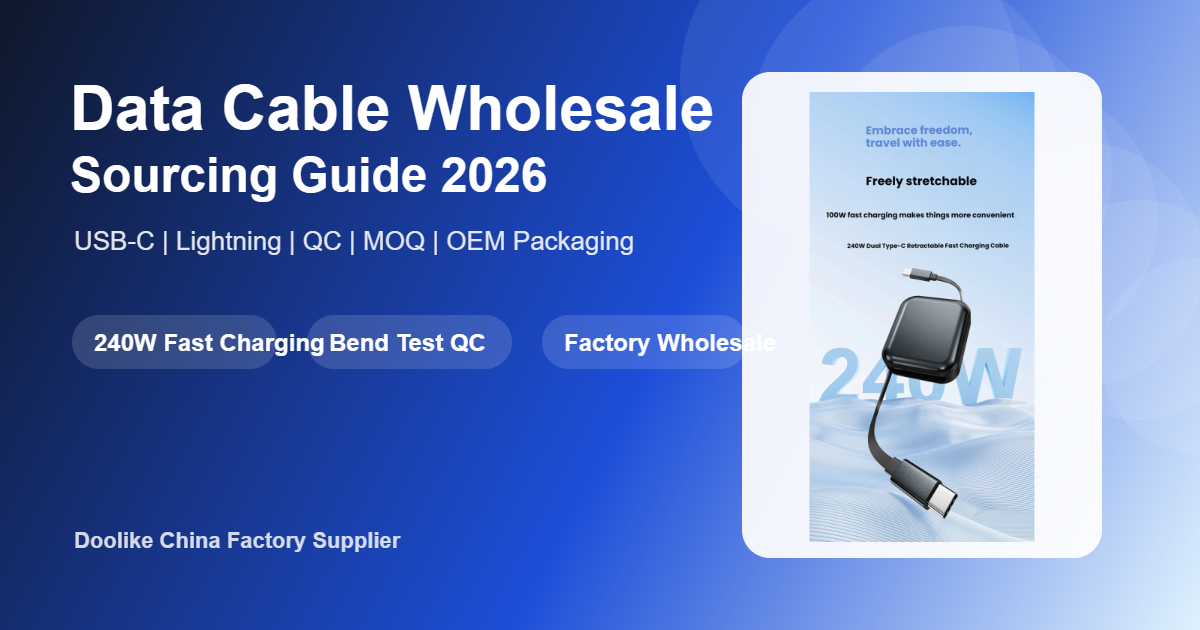
Doolike supplies USB-C and data cables for wholesalers and accessory retailers. Start with the data cable wholesale sourcing guide or ask for samples through contact.
FAQ
Why does a USB-C cable charge slowly?
Common causes include low current rating, missing E-marker chip, poor connector contact, weak conductor material or misleading packaging claims.
Is 240W cable always necessary?
No. Phone-only retailers may sell 60W or 100W cables, but laptop and tablet buyers should verify higher-power cable specifications.
Can Doolike make private-label cable packaging?
Yes. Buyers can request logo printing, cable length options, retail box design and bundled charger sets.
Practical Bulk-Order Validation Plan
Before placing a purchase order for USB-C cables intended for fast charging, convert the sales specification into a written sample-approval sheet. Identify the exact model or version, intended application, test equipment, test method, acceptance limit, sample quantity and person responsible for approval. This prevents a general product description from becoming the only quality standard.
Sample and Pre-Shipment Checks
- Test the agreed cable length with suitable source, load, meter and compatible devices.
- Record negotiated voltage, current and power plus voltage drop and connector temperature.
- Check connector fit, E-Marker requirement where applicable, bending area and batch labeling.
Test several units from the proposed production configuration, not only one demonstration sample. Record the test conditions and results with photos or video where useful. If the order contains several colors, connector versions or compatible models, include each important variant in the approval set. Keep one approved reference sample for comparison with pre-shipment units.
RFQ and Purchase-Order Controls
Write power claim, protocol or E-Marker requirement, length, conductor design, test setup and packing directly into the RFQ and purchase order. Agree in advance how slow charging, unstable negotiation, excessive heat or incorrect identification will be classified, reported and corrected. The inspection report should identify the lot, quantity inspected and result for every agreed checkpoint rather than using a single overall “pass” statement.
For repeat orders, compare the same checkpoints lot by lot. A stable specification, retained sample and consistent test record make supplier performance easier to evaluate and reduce disputes when products reach repair shops, distributors or retail customers.