Quick answer: a 240W marking is not enough for a wholesale approval. Put the exact cable version, connector, claimed current, PD behavior, data function, length, packaging and destination-document needs into the RFQ. Then approve the production version only after sample checks.
What to confirm before approving a 240W USB-C cable
| Checkpoint | What the buyer should ask for | Why it matters |
|---|---|---|
| Exact SKU and connector | Record the model, USB-C to USB-C or other connector version, length, jacket and color. | One product family can contain different electrical and data versions. |
| Power and PD claim | Confirm the rated current, voltage and PD behavior with the intended charger, device and load. | A printed maximum does not prove the whole charging chain will negotiate that power. |
| E-marker | Ask whether the exact high-power version includes an E-marker, and read the approved sample where required. | Do not treat an E-marker statement on one version as proof for every cable. |
| Data and display use | State whether the order needs charging only, USB 2.0, USB 3.x or USB4 data, storage and display compatibility. | 240W charging and high-speed data are separate specifications. |
| Sample and batch controls | Keep an approved sample and record the test setup, lot mark, inspection quantity and packaging artwork. | This gives a reference for pre-shipment inspection and repeat orders. |
| Documents | Request only documents applicable to the exact model and destination market. | USB-IF listings, market compliance documents and transport paperwork are not interchangeable claims. |
Separate 240W charging from USB4 or other data claims
For a cable sold as 240W, first verify the charging configuration. If the buyer also needs high-speed data, external storage or display support, ask for that capability separately and test it with the intended host, device, length and adapters. Do not use a charging test as proof of USB4 performance, and do not use a data label as proof of a 240W PD result.
Catalog examples: confirm by model
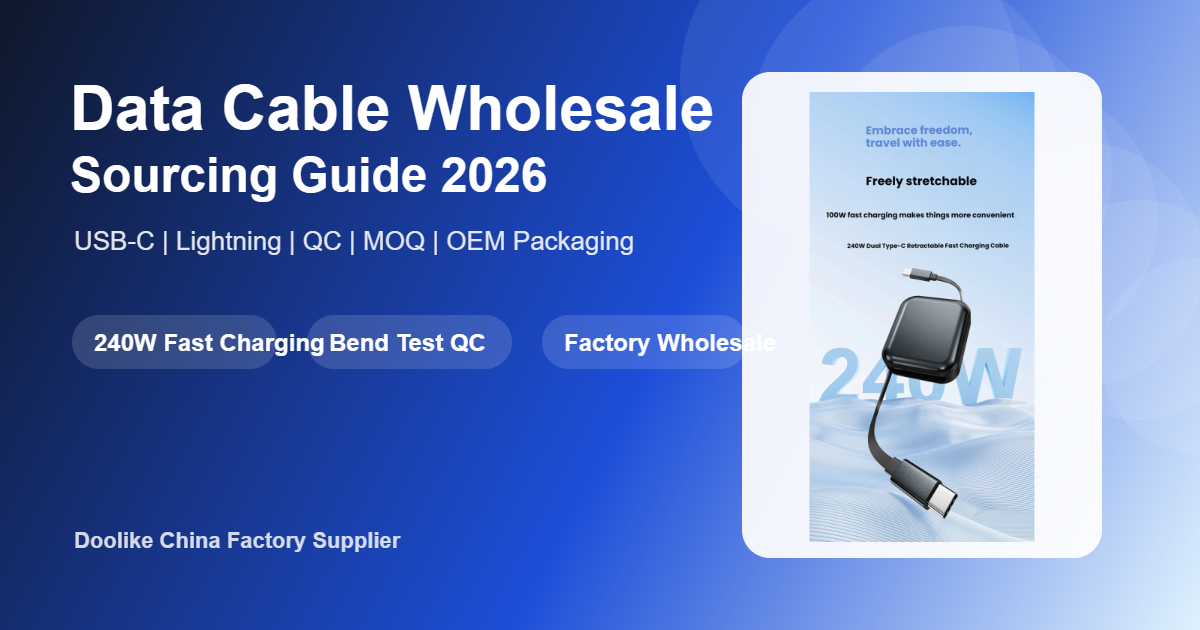
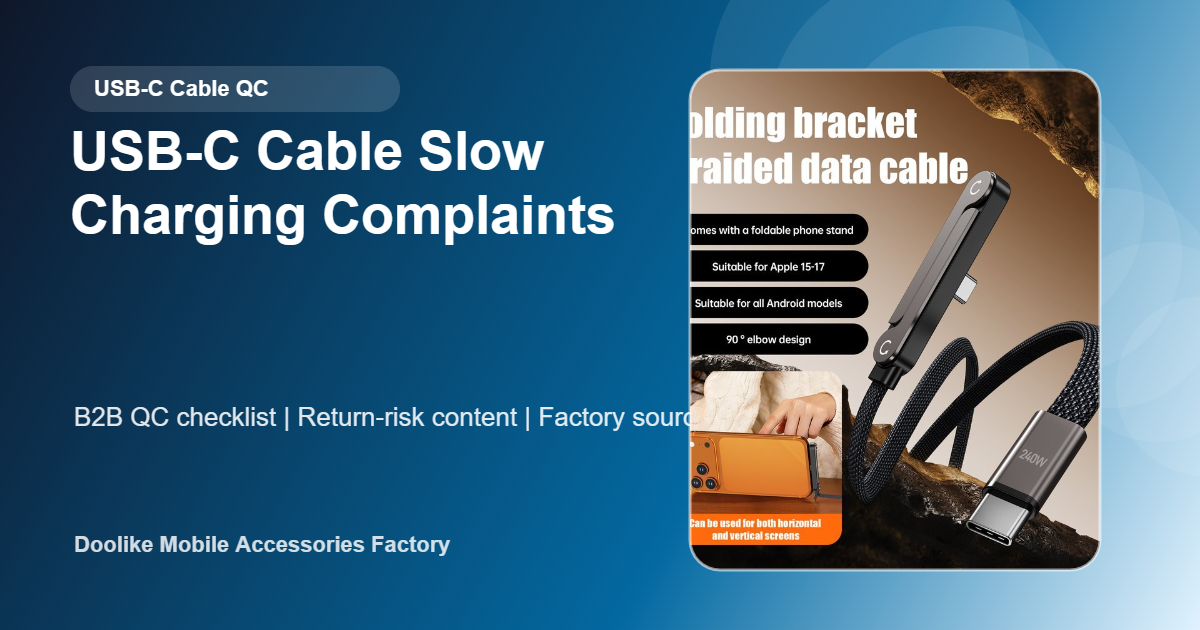
Our data cable wholesale category includes different 240W-style variants. The digital-display USB-C cable has source-listed 240W and USB4 maximums that require sample verification. The foldable-stand cable and the 1 m retractable cable have different designs and commercial terms. Confirm the exact version, available documents and current RFQ conditions before using any claim on retail packaging or a purchase order.
Sample approval and pre-shipment checks
- Approve the precise SKU, connector, length, color and packaging revision.
- Read the E-marker where the specified version requires it, and compare the reading with the agreed specification.
- Test PD negotiation using a suitable source, load and meter; record the devices and conditions.
- For data-capable versions, test the agreed data or display use on the intended equipment.
- Inspect connector fit, bend area, jacket, length, label, carton mark and lot identification.
- Keep the approved sample and compare pre-shipment units with it before release.
RFQ fields that reduce rework
Send the model or application, connector type, length, target current or PD requirement, required data function, quantity, destination, packaging artwork, sample request, target timing and requested documents. For a broader buying process, see our data cable wholesale sourcing guide, slow-charging QC checklist, USB-C cable packaging checklist, buyer QC checklist and factory and QC information.
FAQ
Does every 240W USB-C cable have the same data speed?
No. Charging capacity and data protocol must be confirmed separately for the exact SKU.
Can a buyer rely on package printing alone?
No. Use an approved sample, written specification and appropriate test record before printing a high-power or data claim.
Can Doolike quote mixed cable SKUs?
Yes. Send the model list, quantities, destination and packaging needs. MOQ, lead time, samples and applicable documents are confirmed by model during RFQ.
Next step:request a 240W USB-C cable wholesale quote with the required connector, length, power/data requirement, quantity, destination, packaging and sample or document request.