Phone Case Printing and Branding 2026: UV, IMD, OEM Guide
In 2026, a phone case is no longer just a shell. For many buyers, it is a fast-turn retail SKU, a corporate gift, or a bundle item that makes an accessory set feel branded instead of generic. That is why printing quality, packaging, and MOQ planning matter almost as much as the case material itself.
Grand View Research estimates the global mobile phone protective covers market at USD 25.51 billion in 2024 and expects it to reach USD 53.33 billion by 2033. IDC also forecast 1.24 billion smartphone shipments in 2025. Grand View Research valued the global custom printing market at USD 38.10 billion in 2024. These numbers show why phone case suppliers now compete on branding, not just protection.
If you are still choosing the base material, start with our Silicone vs Hard Phone Case Wholesale 2026 guide and our MagSafe Phone Case Wholesale Guide 2026. If you are bundling cases with screen protection, see our 9D vs 2.5D Tempered Glass: Wholesale Comparison 2026.
Why printing matters more than color in 2026
Plain color is easy to copy. Branding is harder to replace. When a distributor, retailer, or marketplace seller adds a logo, pattern, or premium finish, the product becomes easier to differentiate and easier to price above commodity listings.
For wholesale buyers, printing is doing four jobs at once:
- Retail differentiation: a visible logo or pattern creates shelf presence.
- Brand recall: repeated logo exposure makes the SKU look more trustworthy.
- Margin defense: branding lowers direct price comparison.
- Bundle value: printed cases work better in gift sets and accessory kits.
If your product mix includes clear cases, MagSafe cases, or premium gift-box packaging, branding is even more important. In those segments, the visual finish often matters as much as drop protection.
Best phone case printing methods for wholesale buyers
The right method depends on your target price, artwork complexity, and order size. A simple logo on a silicone case has very different economics from a full-wrap premium design on a clear hybrid case.
| Printing method | Best for | Typical MOQ | FOB add-on per unit | Main advantage | Main limitation |
|---|---|---|---|---|---|
| UV printing | Logos, gradients, small artwork | 300-500 pcs | USD 0.08-0.25 | Fast, flexible, low setup cost | Needs surface protection against scratches |
| Screen printing | Bold solid logos and simple graphics | 500-1,000 pcs | USD 0.06-0.20 | Cheap at scale and visually strong | Not ideal for photo-like detail |
| IMD / IML decoration | Premium all-over branding | 1,000-3,000 pcs | USD 0.35-0.90 | Durable, premium, retail-friendly | Tooling and lead time are higher |
| Hot stamping / laser engraving | Minimal luxury branding | 500 pcs+ | USD 0.05-0.18 | Elegant, clean, and durable | Limited color options |
UV printing
UV printing is usually the easiest starting point for custom phone cases because it balances speed, flexibility, and cost. It works well for logos, gradients, and mixed-color artwork, especially when you need to test a market before committing to larger volumes. For small and mid-size wholesale programs, UV printing is often the best first run.
Screen printing
Screen printing is the practical choice for bold, simple branding. If your design is mostly one or two solid colors, the result is clean and efficient. Many B2B buyers use it on silicone or TPU cases because the cost stays low while the logo remains visible from a distance.
IMD and IML decoration
IMD and IML are better when the case itself needs to feel premium. These methods support stronger decoration depth and are a better fit for retail channels that want a more expensive look. They usually require higher MOQ and more development time, but the upside is a more durable and more differentiated product.
Hot stamping and laser engraving
Hot stamping and laser engraving are the simplest premium branding options. They are especially useful for minimalist logos, corporate gifts, and upscale packaging. If your buyer wants a restrained look rather than a loud graphic, these methods often outperform full-color prints.
Packaging and branding choices that improve conversion
Packaging is part of the product, not an afterthought. A case in a plain bag competes on price alone. The same case in a proper color box, with a barcode and a branded insert card, can support a higher retail price and a better unboxing experience.
| Packaging type | Typical cost | Best channel | Why it works |
|---|---|---|---|
| OPP bag | USD 0.02-0.05 | Wholesale / bulk distribution | Lowest cost and easiest to ship |
| Paper insert card | USD 0.03-0.08 | Retail peg display | Helps with shelf visibility |
| Color box | USD 0.10-0.25 | Amazon, offline retail, chain stores | Improves perceived value and brand trust |
| Gift box | USD 0.35-0.80 | Premium retail, corporate gifts | Supports higher ticket bundles |
For retail-ready SKUs, add the basics buyers expect: barcode, SKU, country-of-origin mark, care instructions, and a QR code that leads to a warranty or brand page. If you are building a bundle, pair the case with a matching screen protector and charging cable. For reference, our tempered glass guide helps with protection bundles, while the cable guide is useful if you want to create a charging set.
What to include in your OEM brief
The fastest way to reduce mistakes is to give the factory a spec sheet before sampling. A good brief should cover the following points:
- Exact phone models: iPhone 15, Samsung Galaxy S series, or a mixed model list.
- Case material: silicone, TPU, PC, TPU+PC, or clear hybrid.
- Printing method: UV, screen, IMD/IML, hot stamping, or laser.
- Artwork file: vector AI/PDF, Pantone references, and approved logo size.
- Print placement: center, bottom, side, full wrap, or camera-ring area.
- Packaging: bag, insert card, color box, or gift box.
- Market requirement: retail shelf, Amazon, distributor, or corporate gift.
- Test expectation: scratch resistance, yellowing resistance, drop test, or wireless charging compatibility.
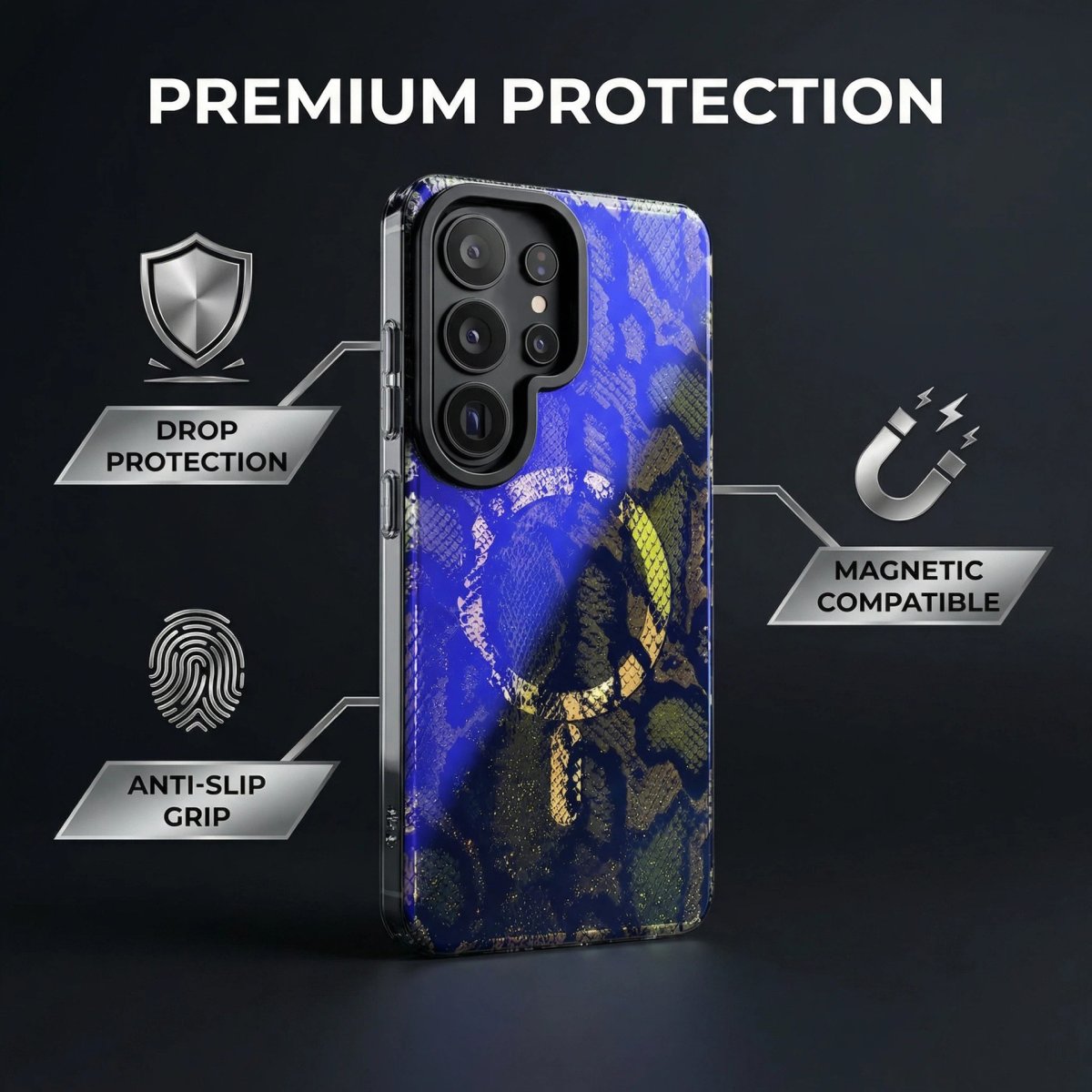
If you are ordering a MagSafe product, be specific about the magnet ring position and wireless charging alignment. That is where a lot of custom projects go wrong. Our MagSafe phone case guide is the right starting point before you sign off on a premium order.
Pricing and MOQ benchmarks for 2026
These are practical factory benchmarks for custom phone case projects. Final pricing will move based on material grade, print coverage, packaging, and the number of models in the order.
| Order type | Recommended case type | MOQ | Typical FOB price | Lead time |
|---|---|---|---|---|
| Simple promo logo | Silicone or TPU | 300-500 pcs | USD 0.25-0.55 | 7-15 days |
| Retail-ready printed SKU | Hard PC or TPU+PC | 500-1,000 pcs | USD 0.45-0.95 | 15-25 days |
| Premium IMD / MagSafe | Clear hybrid or premium TPU | 1,000-3,000 pcs | USD 0.85-1.80 | 20-35 days |
For most wholesale buyers, the best margin comes from a simple design with strong packaging rather than an overcomplicated print. In other words, a clean logo on a well-finished case often sells better than a noisy artwork file that raises the price without improving the buyer’s first impression.
How to reduce sampling mistakes and returns
Use a simple sample flow: blank sample first, then pre-production proof, then a final mass-production check. For clear or premium cases, always confirm fit, color, scratch resistance, and artwork on a real-sized mockup before release.
FAQ
What printing method is best for small custom phone case orders?
UV printing is usually the best starting point for small orders because it gives you flexible artwork, fast sampling, and a relatively low MOQ. If your design is simple and mostly one color, screen printing can be even cheaper.
What is the MOQ for phone case printing in 2026?
Most factories start around 300-500 pieces for simple UV or logo printing and 1,000-3,000 pieces for IMD, IML, or other premium full-decoration projects. The more phone models and packaging variants you add, the higher the MOQ usually becomes.
How much does a custom printed phone case cost?
Typical FOB pricing is usually around USD 0.25-1.20 per piece, depending on material, print coverage, and packaging. A plain silicone promo case is much cheaper than a premium IMD or MagSafe retail SKU.
Is the phone case market still growing in 2026?
Yes. Grand View Research says the mobile phone protective covers market was worth USD 25.51 billion in 2024 and could reach USD 53.33 billion by 2033, while IDC forecast 1.24 billion smartphone shipments in 2025. That is a large and still active replacement market.
Should I bundle phone cases with other accessories?
Yes, bundling phone cases with tempered glass and charging cables usually improves average order value and reduces price-only competition. A case becomes much more attractive when the buyer can sell it as a complete protection kit.
Do MagSafe cases need special printing rules?
Yes. MagSafe cases need careful magnet-ring alignment and a print layout that does not interfere with wireless charging. For premium SKUs, always approve the magnet position and test the charging performance before mass production.
Sources: Grand View Research’s Mobile Phone Protective Covers Market, Grand View Research’s Custom Printing Market, and IDC’s Worldwide Smartphone Market updates.
Need samples, pricing, or OEM packaging advice? Contact Doolike through the contact page and ask for a custom phone case quote.