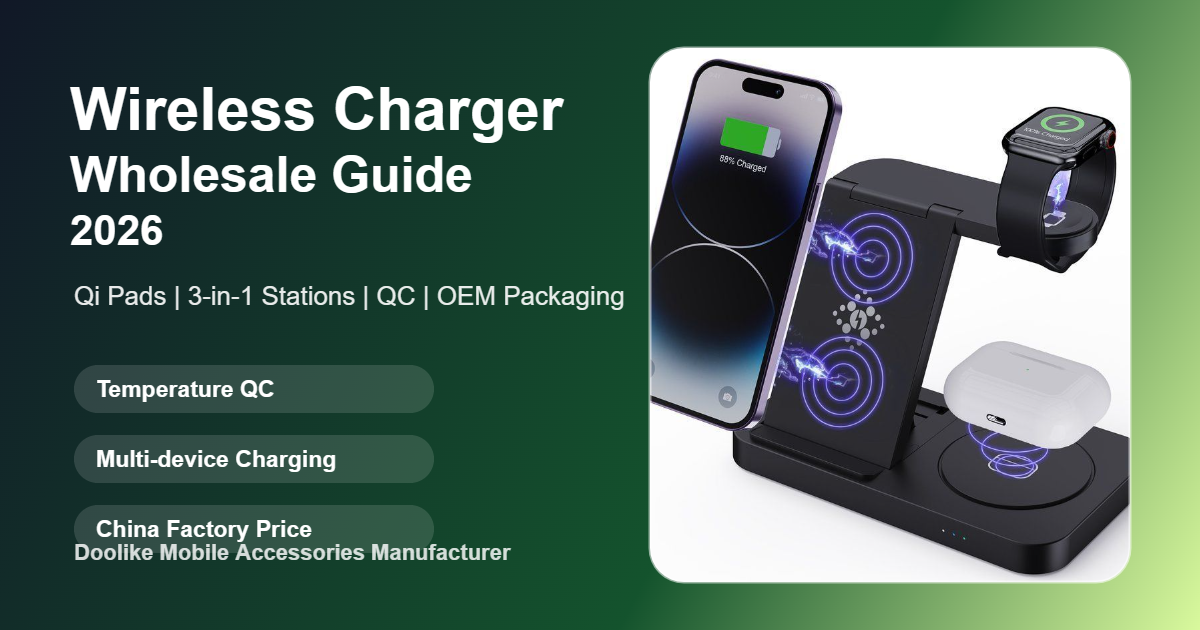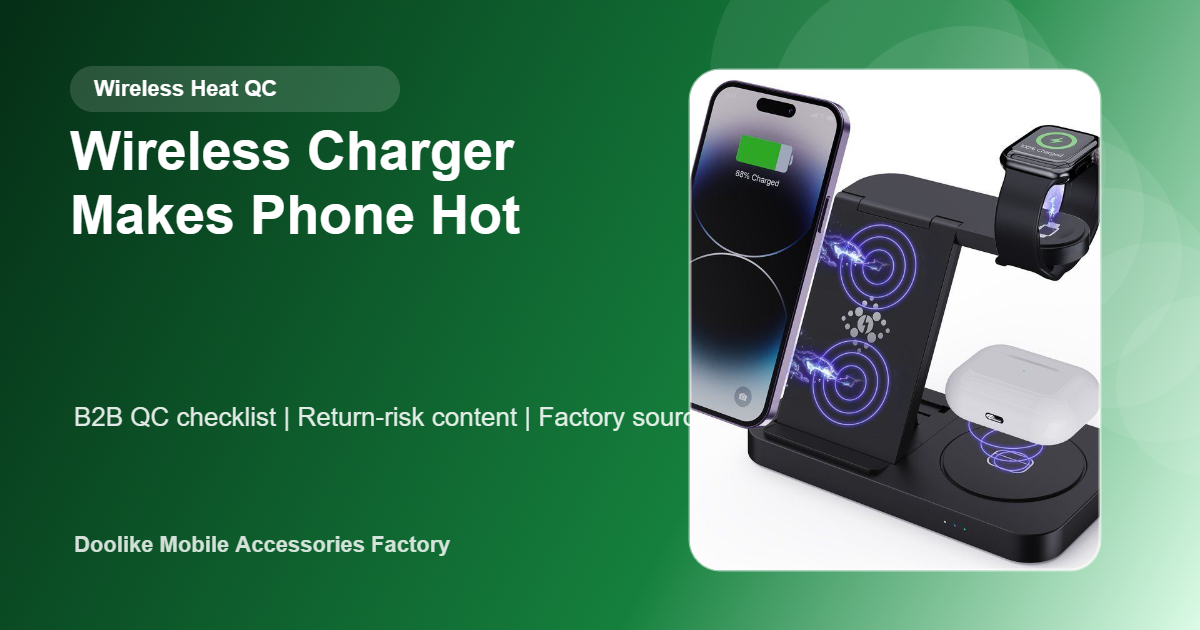
Short answer: if wireless charger customers complain about heat, the importer should check coil alignment, charging distance, FOD protection, input adapter match, case compatibility and packaging instructions before blaming the end user.
The buyer fear moment: "The customer says the charger is unsafe because the phone is hot"
Wireless charging naturally produces more heat than direct cable charging, but customers judge by touch. If the phone feels too hot on the nightstand, the product becomes a return risk even when it still charges.
QC checks before bulk order
| Risk | Test | Buyer note |
|---|---|---|
| Heat complaint | Temperature rise test with phone and case | Test for 2-3 hours, not only 5 minutes |
| Misalignment | Coil position and magnet hold check | Important for 3-in-1 stands |
| Foreign object risk | FOD test | Protects brand trust |
| Slow charge | Input adapter and output compatibility | Print required adapter wattage |
| Retail confusion | Packaging instruction review | Explain case thickness and position |
What to put in product listings
- Supported phone models and magnetic alignment notes.
- Required input adapter wattage.
- Case thickness recommendation.
- Clear warning about metal rings, cards or foreign objects.
- Realistic charging speed, not exaggerated claims.
Doolike supplies wireless chargers and 3-in-1 charging stations for B2B buyers. See the wireless charger wholesale guide for broader sourcing details.
FAQ
Is phone heat during wireless charging always dangerous?
No. Some warmth is normal, but excessive heat, unstable charging or poor alignment should be tested before bulk shipment.
What is the first thing importers should test?
Run temperature and charging stability tests with real phones, common cases and the exact adapter planned for retail bundles.
Can wireless chargers be customized?
Yes. Doolike can support logo, packaging, plug adapter bundles and model-specific retail positioning.
Practical Bulk-Order Validation Plan
Before placing a purchase order for wireless chargers where heat-related returns are a concern, convert the sales specification into a written sample-approval sheet. Identify the exact model or version, intended application, test equipment, test method, acceptance limit, sample quantity and person responsible for approval. This prevents a general product description from becoming the only quality standard.
Sample and Pre-Shipment Checks
- Define the device, case, ambient temperature, input adapter and charging duration used for comparison.
- Check alignment, foreign-object response, charging interruptions and surface temperatures at agreed points.
- Repeat tests across several units and all advertised charging positions.
Test several units from the proposed production configuration, not only one demonstration sample. Record the test conditions and results with photos or video where useful. If the order contains several colors, connector versions or compatible models, include each important variant in the approval set. Keep one approved reference sample for comparison with pre-shipment units.
RFQ and Purchase-Order Controls
Write device set, input adapter, alignment method, temperature checkpoints, duration and acceptance limits directly into the RFQ and purchase order. Agree in advance how excess heat, intermittent charging, poor alignment tolerance or inconsistent units will be classified, reported and corrected. The inspection report should identify the lot, quantity inspected and result for every agreed checkpoint rather than using a single overall “pass” statement.
For repeat orders, compare the same checkpoints lot by lot. A stable specification, retained sample and consistent test record make supplier performance easier to evaluate and reduce disputes when products reach repair shops, distributors or retail customers.