Por que o material certo da capa importa
Capas para celular não são uma linha de produto única. No atacado, capas de silicone, PC/ABS rígido e híbridas de TPU+PC comportam-se como negócios diferentes: métodos de impressão diferentes, MOQs diferentes e perfis de margem diferentes.
O mercado ainda é grande o suficiente para sustentar os três. A Grand View Research avalia o mercado global de capas protetoras para celulares em USD 25,51 bilhões em 2024 e espera que ele alcance USD 53,33 bilhões até 2033 com uma CAGR de 8,6%. O mesmo relatório afirma que as capas tipo "body glove" lideraram com 33,13% de participação, as vendas offline representaram 67,77% e a Ásia-Pacífico deteve 48,32%. Na prática, isso significa que o mercado ainda recompensa tanto SKUs de estilo de vida com toque macio quanto embalagens mais prontas para o varejo e amigáveis para as prateleiras. A IDC também relatou 1,24 bilhão de remessas de smartphones em 2024, o que mantém cada ciclo de lançamento atrelado a uma nova onda de capas.
Se a sua linha inclui acessórios magnéticos, consulte nosso Guia de Atacado de Capas MagSafe para Celular 2026 para especificações de anéis magnéticos e lógica de preços.
Silicone vs. capa rígida: o que cada uma faz de melhor
Capas de silicone
As capas de silicone vencem quando o comprador deseja aderência, um toque mais macio e um visual atraente para presente. Elas também são mais fáceis de posicionar em sortimentos de tons pastéis, estilo de vida e promocionais.
- Melhor para: brindes corporativos, caixas para influenciadores, varejo de massa e marcas focadas em cores.
- Pontos fortes: aderência forte, toque macio, branding simples, ajuste flexível.
- Atenção: atração de poeira, menor nitidez de impressão e maior chance de ficarem pegajosas se o acabamento da superfície for ruim.
Capas rígidas
As capas rígidas, geralmente de PC ou ABS, vencem quando o comprador deseja artes nítidas, um perfil mais fino e uma sensação premium mais limpa. Elas são a melhor tela para impressões coloridas, detalhes no anel da câmera e gráficos sazonais.
- Melhor para: e-commerce, SKUs de moda, vendedores de marketplace e coleções de tendências de giro rápido.
- Pontos fortes: excelente definição de impressão, sensação mais leve, menor custo unitário em designs simples.
- Atenção: menor absorção de choque do que capas de silicone ou híbridas, e arranhões mais visíveis se o revestimento for fraco.
Comparação rápida
| Material | Toque | Qualidade de impressão | Desempenho em quedas | MOQ típico | Faixa FOB típica | Melhor canal |
|---|---|---|---|---|---|---|
| Silicone | Macio, aderente | Média | Média | 300-500 unidades | USD 0,45-0,95 | Promocional, presente, varejo offline |
| PC/ABS Rígido | Fino, rígido | Alta | Menor | 300-500 unidades | USD 0,30-0,80 | E-commerce, SKUs focados em arte |
| Híbrido TPU+PC | Equilibrado | Alta | Alta | 500-1.000 unidades | USD 0,55-1,35 | Premium, MagSafe, kits |
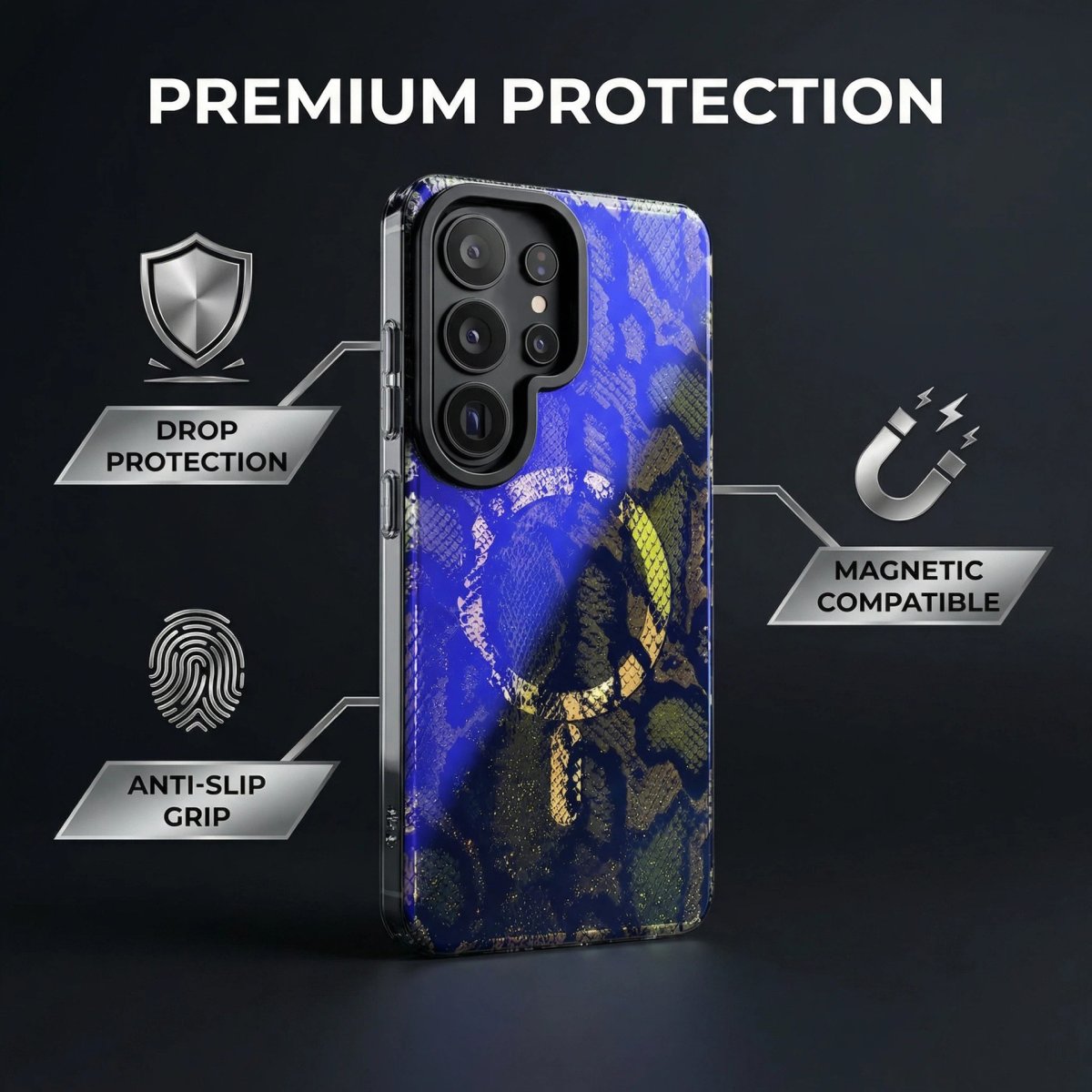
Se você está montando um sortimento magnético, o híbrido TPU+PC é frequentemente o meio-termo mais seguro. Ele oferece melhor desempenho contra impactos do que capas puramente rígidas e melhor clareza de impressão do que muitas opções de silicone com toque macio.
Benchmarks de preço de atacado, MOQ e prazo de entrega
Para 1.000 unidades, as faixas comuns de FOB na China são:
- Capas de silicone em estoque: USD 0,45-0,95 por peça.
- Capas de silicone personalizadas: USD 0,80-1,50 por peça.
- Capas de PC/ABS rígido: USD 0,30-0,80 por peça.
- Capas rígidas com impressão UV: USD 0,60-1,20 por peça.
- Capas híbridas TPU+PC: USD 0,55-1,35 por peça.
A maioria das fábricas pode amostrar moldes em estoque em 5-10 dias e produzir em massa em 15-25 dias. Pedidos impressos personalizados geralmente precisam de 1.000 unidades ou mais, enquanto formatos totalmente personalizados e novos moldes geralmente precisam de 3.000 unidades+ para que o ferramental valha a pena.
Os verdadeiros impulsionadores de custo não são apenas o material. A cobertura de modelos, anéis magnéticos, revestimento resistente a arranhões, estilo de embalagem e complexidade da impressão podem alterar o preço mais do que o plástico em si. Uma capa rígida simples pode ser mais barata do que uma capa de silicone premium com acabamento de toque macio e logotipo detalhado.
Qual canal compra qual capa?
E-commerce e social commerce
Capas rígidas e híbridas geralmente superam o silicone na fotografia de página de produto porque mantêm a arte nítida e parecem mais finas na tela. Se você vende na Amazon, TikTok Shop, Shopee ou Shopify, o design em si torna-se parte da conversão.
Presentes e promoções corporativas
As capas de silicone geralmente vencem aqui porque são mais macias ao toque e mais fáceis de personalizar com logotipos simples, slogans ou marcas em relevo. Elas também são uma escolha natural para kits de conferências, presentes para funcionários e brindes de marca compartilhada.
Varejo offline e kits de distribuidores
A Grand View Research diz que as vendas offline ainda representaram 67,77% da categoria em 2024, portanto, o apelo na prateleira ainda é importante. Embalagens transparentes, etiquetas de código de barras e cores rapidamente reconhecíveis importam mais do que muitos compradores de primeira viagem esperam.
Se você montar kits de acessórios, combine as capas com nossos artigos Vidro Temperado 9D vs 2.5D: Comparação de Atacado 2026 e Guia de Compra de Cabos USB-C para USB-C no Atacado 2026 para aumentar o valor do carrinho.
Opções de branding que protegem a margem
A melhor escolha de marca depende do material. Capas rígidas lidam bem com impressão UV e gráficos ricos. O silicone prefere uma estratégia de logotipo mais simples: relevo, baixo-relevo ou impressão limpa de uma cor.
- Impressão UV: melhor para capas rígidas de PC/ABS e híbridas com designs ricos em arte.
- Serigrafia: funciona para silicone quando o logotipo é simples e a contagem de cores é baixa.
- Relevo/Baixo-relevo: confere ao silicone uma sensação premium e geralmente dura mais do que a decoração com muita tinta.
- Integração de anel magnético: essencial se você estiver montando um sortimento estilo MagSafe.
- Embalagem: caixas de varejo, cartões para pendurar ou capas ecológicas podem aumentar o valor percebido rapidamente.
Uma regra prática: se a arte precisa parecer perfeita à distância de um braço, escolha uma capa rígida ou híbrida. Se a capa precisa ser macia, aderente e parecer um presente, escolha silicone.
Como escrever uma RFQ melhor
Peça à fábrica para cotar por modelo, não por tipo genérico de capa. Uma RFQ forte deve listar:
- Gama de modelos de telefone e previsão anual.
- Material: silicone, PC/ABS ou híbrido TPU+PC.
- Acabamento: fosco, brilhante, silicone líquido, toque macio ou anti-amarelamento.
- Método de logotipo e tamanho da impressão.
- Estilo de embalagem e formato de código de barras.
- Alvo de teste: altura de queda, resistência a arranhões e alinhamento magnético, se necessário.
Se o projeto for para um novo formato em vez de um molde existente, reserve mais tempo para ferramental e revisões de amostra. É aí que muitos compradores subestimam seus orçamentos.
FAQ
Qual é melhor para atacado: silicone ou capas rígidas para celular?
Resposta curta: Capas rígidas geralmente vencem para SKUs de varejo impressas, enquanto capas de silicone vencem para pedidos promocionais focados em aderência. Se o seu canal se preocupa com artes nítidas e mudanças rápidas de SKU, escolha capas rígidas ou híbridas; se se preocupa com o toque e o conforto diário, escolha silicone.
Qual é o MOQ para capas de celular personalizadas?
Resposta curta: A maioria dos pedidos de moldes em estoque começa em 300-500 unidades, SKUs impressas geralmente começam em 1.000 unidades, e novos moldes geralmente precisam de 3.000 unidades+. Se você precisa de vários modelos de telefone em um lançamento, peça um plano de MOQ combinado para não comprar excessivamente os itens de giro lento.
Quanto custam as capas de silicone e rígidas para celular em 2026?
Resposta curta: Uma faixa FOB realista é de cerca de USD 0,30-1,50 por peça, dependendo do material, método de impressão, anel magnético e embalagem. Capas rígidas simples são geralmente as mais baratas, mas um SKU de silicone premium pode custar mais do que uma capa rígida básica quando o branding é adicionado.
Qual material imprime melhor?
Resposta curta: Capas rígidas de PC/ABS geralmente imprimem melhor porque os gráficos UV permanecem nítidos e finos, enquanto o silicone é melhor para logotipos simples e branding tátil. Se sua arte tem linhas finas, gradientes ou detalhes fotográficos, capas rígidas ou híbridas são a escolha mais segura.
As capas híbridas TPU+PC valem o preço mais alto?
Resposta curta: Sim, porque as capas híbridas TPU+PC oferecem aos compradores um melhor equilíbrio de proteção, qualidade de impressão e apelo premium na prateleira, o que é útil para MagSafe e vendas baseadas em kits. Elas são frequentemente o ponto ideal quando você deseja um SKU que possa lidar com canais de varejo e online.
Precisa de uma linha de capas para celular que se ajuste ao seu canal?
A Doolike pode ajudá-lo a escolher o material, método de impressão e embalagem certos para o seu mercado. Se você deseja um orçamento de capa de silicone, rígida ou híbrida, entre em contato com a Doolike para amostras OEM/ODM e preços específicos para o seu canal.
Fontes referenciadas: Grand View Research, Mobile Phone Protective Covers Market (2025 - 2033); IDC, Worldwide Smartphone Shipments Grew 6.4% in 2024, Despite Macro Challenges.