Por que GaN vs. Silício é importante em 2026
O GaN não é mais uma atualização de nicho. A Grand View Research afirma que o mercado global de acessórios móveis foi avaliado em 105,45 bilhões de dólares em 2025 e projeta-se que alcance 189,92 bilhões de dólares até 2033. Ao mesmo tempo, a BCC Research projeta que o mercado de carregadores com tecnologia GaN cresça de 1,4 bilhão de dólares em 2025 para 3,7 bilhões de dólares até 2030, um CAGR de 20,8%. No segmento de USB-PD de 65W+, a Patsnap relata que os dispositivos de energia GaN já capturaram mais de 50% do mercado em 2025.
Para compradores no atacado, a questão não é mais se o GaN é moderno. A verdadeira questão é qual mix de SKUs oferece a melhor margem, o melhor apelo na prateleira e o menor risco de devolução. Se você deseja conhecer primeiro o básico sobre fornecimento, leia nosso Guia de Atacado de Carregadores GaN 2026, e depois o guia Certificações de Segurança para Carregadores GaN Explicadas 2026. Para combinações de cabos, nosso Guia de Compra de Cabos USB-C para USB-C no Atacado 2026 explica por que incompatibilidades de 60W e 100W geram chamados de suporte.
O que o GaN realmente muda em um carregador
Corpos menores e melhor margem térmica
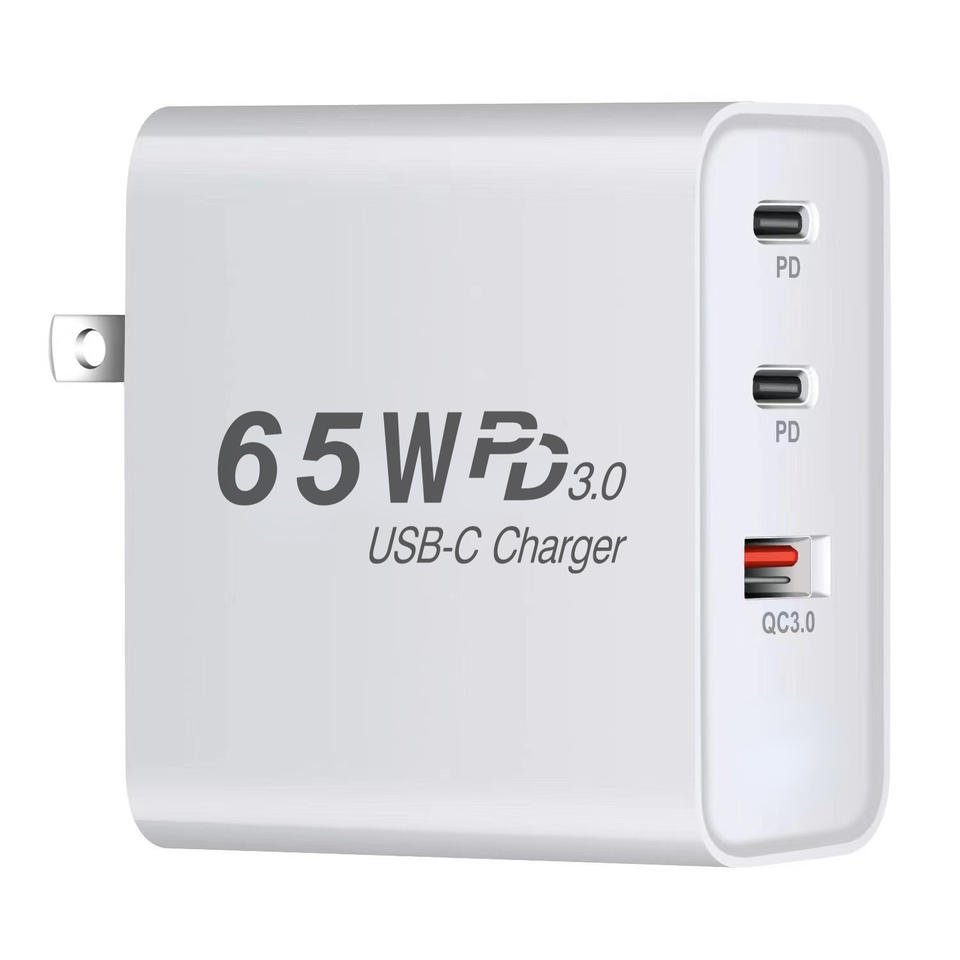
O GaN alterna mais rápido e em frequências mais altas do que os estágios de energia de silício tradicionais, o que permite aos engenheiros reduzir as peças magnéticas e manter o gabinete menor. Na prática, isso significa que um carregador GaN de 65W pode fornecer uma saída de nível de laptop em um corpo que é mais fácil de transportar, mais fácil de fotografar e mais fácil de incluir em pacotes com produtos premium.
O GaN também oferece aos designers mais margem térmica. Isso não remove o calor magicamente, mas ajuda a reduzir a energia desperdiçada que se transforma em calor dentro de uma estrutura compacta. Para os compradores, o resultado prático é um carregador que parece mais premium e, muitas vezes, mais pronto para o varejo na prateleira.
Por que os varejistas gostam do formato
Fontes de alimentação compactas são mais fáceis de enviar, exibir e vender como acessórios de viagem. Se você está construindo um canal onde o tamanho importa, o GaN geralmente vence o teste da primeira impressão antes mesmo de o cliente olhar a ficha técnica.
É também por isso que o GaN é uma ótima opção para pacotes de laptops, kits de viagem, kits para criadores e brindes corporativos premium. Ele suporta um valor percebido mais alto sem forçá-lo a redesenhar toda a linha de produtos.
Quando o silício ainda faz sentido
A faixa de orçamento de baixa potência
Para SKUs promocionais de 5W a 20W, pacotes escolares e pacotes legados apenas para telefones, o silício ainda pode ser a escolha racional. Se o cliente precisa apenas de uma carga básica para o telefone e a meta de preço de varejo é apertada, um carregador de silício simples pode manter a BOM (Lista de Materiais) baixa e a margem viável.
O silício também faz sentido quando o produto é tratado como um item utilitário em vez de um SKU principal. Nesse segmento, o tamanho compacto é bom, mas o comprador geralmente é mais sensível ao preço do que à densidade de potência.
O canal ultra sensível ao preço
Se a sua base de clientes compra pelo preço unitário primeiro e pergunta sobre a tecnologia de energia depois, o silício ainda é útil. Não é a resposta mais empolgante, mas continua sendo a resposta mais barata para muitos programas de entrada.
A regra clara é simples: o silício é a aposta econômica; o GaN é a aposta de crescimento.
Benchmarks de Preço de Atacado e MOQ
A tabela abaixo é um benchmark FOB prático para pedidos de 1.000 unidades. As cotações reais variarão com base no chipset, número de portas, tipo de plugue, material do gabinete, método de logotipo e se você inclui um cabo na caixa.
| Potência | FOB Silício | FOB GaN | MOQ Típico | Melhor Uso |
|---|---|---|---|---|
| 20W | USD 0,80-1,20 | USD 1,40-2,10 | 500-1.000 unidades | Caixas promocionais e pacotes de entrada para telefones |
| 45W | USD 2,20-3,20 | USD 3,50-5,00 | 1.000-3.000 unidades | Adicional de varejo, kits de tablets e conjuntos de viagem |
| 65W | USD 3,10-4,30 | USD 4,80-6,90 | 1.000-3.000 unidades | Laptops, carregamento de vários dispositivos e brindes premium |
| 100W | Raro | USD 7,50-11,50 | 3.000 unidades+ | Notebooks, criadores de conteúdo e pacotes de viagem de alta qualidade |
O planejamento de MOQ é tão importante quanto o preço. Gabinete padrão mais impressão de uma cor geralmente começa em 500-1.000 unidades. Embalagens personalizadas e manuais em vários idiomas geralmente elevam o pedido para 1.000-3.000 unidades. Se você deseja um gabinete personalizado, alterações personalizadas no PCB ou um programa completo de marca própria (private-label), planeje 3.000 unidades ou mais.
Para a maioria dos compradores, o caminho de lançamento mais seguro é um SKU principal de GaN de 65W simples, mais um SKU de entrada de silício de custo mais baixo. Isso oferece uma escada favorável à margem sem forçar todos os canais a comprar o mesmo produto.
Conformidade e Pacotes: Não pule os detalhes
O GaN não substitui a conformidade
O GaN muda o semicondutor, não as regras. Você ainda precisa dos mesmos documentos de entrada no mercado: CE e RoHS para a Europa, FCC para os Estados Unidos e UL ou ETL onde seu canal exigir. Se você está vendendo para o varejo regulamentado, os testes de eficiência energética também são importantes.
Os testes térmicos são ainda mais importantes em corpos compactos. Um layout de PCB ruim pode fazer com que um carregador pequeno aqueça mais do que deveria, e isso gera devoluções, reclamações de garantia e avaliações negativas. Um bom teste de amostra deve verificar a estabilidade da carga, a temperatura da carcaça, o encaixe do plugue e a compatibilidade do cabo.
Combine o cabo certo com o carregador certo
Um carregador de 100W enviado com um cabo fraco parece barato no papel e caro em chamados de suporte. Combine a classificação do cabo com a classificação do carregador, especialmente quando você vende kits de 65W e 100W. Nosso Guia de Compra de Cabos USB-C para USB-C no Atacado 2026 e o guia de velocidade de carregamento e bitola de fio de cabo USB explicam por que o cabo é parte do produto, não um pensamento tardio.
Se o seu canal é premium e voltado para viagens, o GaN deve ser o SKU principal. Se o seu canal é focado em preço e promoções, o silício ainda pode conquistar seu lugar.
FAQ
Um carregador GaN realmente vale o custo extra?
Sim, se você vende 30W ou mais, ou se deseja um produto de prateleira mais premium. O custo unitário extra geralmente lhe proporciona um corpo menor, melhor valor percebido e uma adequação mais forte para canais de viagem, laptops e presentes. Se a meta de preço de varejo for inferior a 10 dólares e o produto for apenas um carregador de telefone básico, o silício ainda pode ser a escolha mais inteligente.
Quanto custa a mais um carregador GaN em pedidos de 1.000 unidades?
Geralmente cerca de 1 a 3 dólares a mais por unidade do que um carregador de silício comparável, dependendo da potência e do número de portas. A diferença geralmente é pequena o suficiente para que o preço de prateleira mais alto e a melhor marca compensem isso em canais premium.
Qual MOQ devo esperar para carregadores GaN OEM?
Planeje de 500 a 1.000 unidades para modelos em estoque, 1.000 a 3.000 unidades para tiragens com marca e 3.000 unidades ou mais quando desejar gabinete personalizado, trabalho de PCB personalizado ou um pacote completo de marca própria.
Carregadores GaN precisam de certificações diferentes?
Não. A lista de conformidade ainda é definida pelo seu mercado-alvo, não apenas pelo semicondutor. O GaN não remove os requisitos de CE, FCC, RoHS, UL, ETL ou testes de eficiência. Ele apenas muda o interior do carregador.
O silício ainda pode vencer em 2026?
Sim. O silício ainda vence em canais de baixa potência, baixo preço e orientados a promoções, onde o comprador se preocupa mais com a fatura do que com a compacidade. É a escolha prática para muitos kits de entrada.
O que devo incluir com um carregador GaN de 65W ou 100W?
Inclua um cabo que corresponda ao mesmo limite de potência. Um carregador de 65W não deve ser limitado por um cabo fraco, e um carregador de 100W deve ser emparelhado com um cabo USB-C com classificação de 100W. Isso mantém a experiência do produto limpa e reduz problemas de suporte.
Fontes de dados: Grand View Research, BCC Research e Patsnap.
Precisa de amostras OEM ou de um orçamento de marca própria?Entre em contato com a Doolike aqui e informe a potência desejada, o tipo de plugue e o estilo da embalagem.